Cambrian 539 to 485 Ma
Anomalocaris
奇虾属
The largest animal of the Cambrian, at up to a metre long, and the first known apex predator in the fossil record. Named from three separate body parts, each of which had been given its own genus before anyone found them joined.
Published Reading time 2 min read
A body in three pieces, mistaken for three animals
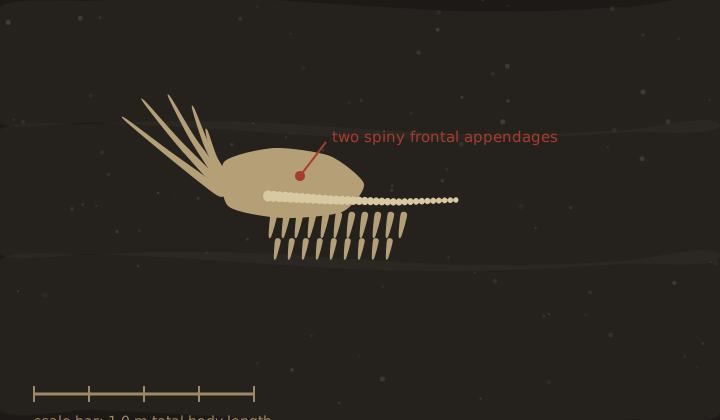
The frontal appendage was named Anomalocaris in 1892 and read as a shrimp. The circular mouth was named Peytoia in 1911 and read as a jellyfish. The body was named Laggania in 1912 and read as a sea cucumber. In 1985 a Chengjiang specimen collected by Hou Xian-guang showed all three in place on one animal, and the pieces collapsed into a single organism.
| Piece | Named | Believed to be |
|---|---|---|
| frontal appendage | 1892 | a shrimp |
| circular mouth | 1911 | a jellyfish |
| body | 1912 | a sea cucumber |
| the whole animal | 1985 | one predator |
How a single species acquired three names before it acquired one body.
The mouth, and the compound eyes
The mouth is a ring of plates that closes from the outside in, and it sits under a broad head with two large compound eyes on stalks. Those eyes were studied in detail from Emu Bay material: one specimen preserves over 16,000 lenses in a single eye, more than any other known arthropod. The visual power implied is enormous, which fits an active predator in clear shallow water.
How it swam
The body carries a series of lateral flaps, one pair per segment, that overlap slightly and undulate in sequence. Modelling with these flaps, the animal is a slow cruiser rather than a fast pursuer -- probably a metre-long animal swimming at a walking pace and using its eyes to find soft-bodied prey on the seafloor.
What it actually ate
Direct evidence is limited to coprolites containing what look like trilobite fragments and, from Chengjiang, gut contents with no mineralized shell. The mouth plates do not appear able to shear, so the current reading is that Anomalocaris took soft prey and possibly scavenged, and that the trilobite fragments in Cambrian coprolites may belong to something else.
- No mineralized shell found in any Anomalocaris gut.
- Mouth plates close but do not cross to shear.
- Anomalocaris is by far the largest soft-bodied Cambrian animal known.
Sources
Reference works and further reading for the material in this entry.
Where the argument is
Whether it could bite through trilobites. Cambrian coprolites from the Emu Bay Shale contain broken trilobite fragments, and Anomalocaris is the obvious candidate because of its size and its spiny appendages. But studies of the mouth apparatus found that the plates could not meet in the middle to generate a shearing bite, which weakens the shell-crushing case and suggests it fed on soft-bodied animals.
Frequently misread
-
ClaimAnomalocaris was a shrimp, or an early arthropod of the kind alive today.
What the record showsIt is a radiodont: an early offshoot of the arthropod stem, before crustaceans existed. Its segmented flaps are not jointed legs, and the appendages in front of its mouth are unlike any feeding limb on a living animal.
-
ClaimIts name comes from a single animal that was badly described.
What the record showsThe name came from a single separate fossil -- one frontal appendage, named as a shrimp in 1892. The mouth was later named Peytoia, and the body Laggania; only in 1985, when a complete Chengjiang specimen showed all three attached, were they combined. Anomalocaris is a name built from three misidentifications.