Permian 299 to 252 Ma
Dimetrodon
异齿龙属
A predator of the Early Permian, and the animal most consistently mistaken for a dinosaur in museum halls. It is a synapsid -- closer to a mammal than to any reptile alive today -- and the tallest thing on its floodplain, thanks to a sail of elongated back spines.
Published Reading time 2 min read
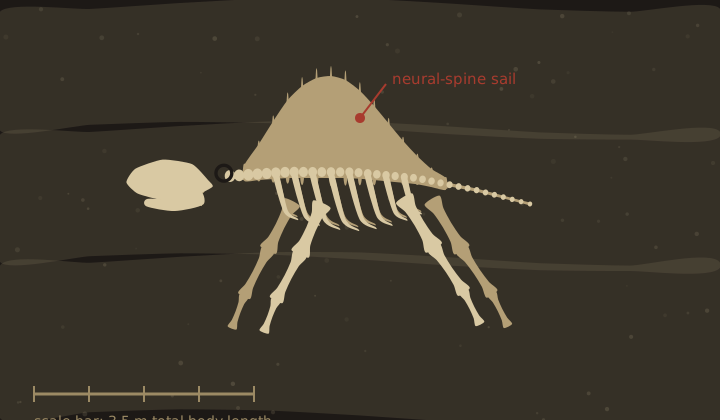
The sail, bone by bone
The sail is not a separate structure. Each strut is a neural spine, the same bone that forms the bumps you can feel along the back of any mammal, extended to ten or more times its usual length. The spines are grooved along their length, and those grooves carry the impressions of blood vessels. In the largest species the sail rose over a metre above the spine.
A jaw with two sets of teeth
The name means 'two measures of tooth'. The front of the jaw carries a few long, recurved canines; behind them sit rows of shorter, serrated teeth for shearing. That division is a synapsid feature and is not found in dinosaurs.
- Incisor-like teeth at the front: nipping.
- One or two pairs of long canines: seizing.
- Smaller serrated teeth behind: shearing flesh.
What it hunted
Dimetrodon shares the Texas Red Beds with the large amphibian Eryops and with several smaller synapsids including the herbivorous Edaphosaurus, which also has a sail. Coprolites from the same beds contain bone fragments and fish scales. Stomach contents are rare, but the body sizes present suggest Dimetrodon was the apex predator of its floodplain.
Heat, display, or both
Because the spines are grooved and the grooves carried vessels, and because the sail is large and thin and faces the sun when the animal turns broadside, thermoregulation is mechanically plausible: a big sail warms fast in the morning and sheds heat in the afternoon. The species with larger sails lived closer to the palaeoequator, which is the pattern the model predicts.
| Proposed function | Supporting line | Weak point |
|---|---|---|
| Thermoregulation | grooved spines, vessel traces, size vs. latitude | no living analogue to test against |
| Sexual display | dimorphism in relative sail height | sample too small to be conclusive |
| Species recognition | the sail is a unique silhouette | hard to falsify |
The three standing explanations for the sail, with what would decide between them.
Sources
Reference works and further reading for the material in this entry.
Where the argument is
The sail's function. Heat exchange is the popular reading and has support from the density of blood-vessel impressions in the sail bones of relatives; but no living animal has an analogous structure, so the argument rests on modelling rather than observation. Display and species recognition remain live alternatives.
Frequently misread
-
ClaimDimetrodon is a dinosaur.
What the record showsIt is a synapsid, on the line that leads to mammals, and it lived about 60 million years before the first dinosaur. The sprawling stance and the single opening behind the eye socket are the giveaway.
-
ClaimThe sail was a fin for swimming, or a parachute.
What the record showsThe sail is a pair of elongated neural spines -- bone, not membrane -- and Dimetrodon lived in a terrestrial floodplain, not in water. Whatever it was for, it was stiff and unpowered.