Jurassic 201 to 145 Ma
Allosaurus
异特龙属
The most common large predator of the Morrison Formation, and the dinosaur that defines the Jurassic megafauna of North America. Known from hundreds of individuals, which makes its injuries and growth the best-documented of any large theropod.
Published Reading time 1 min read
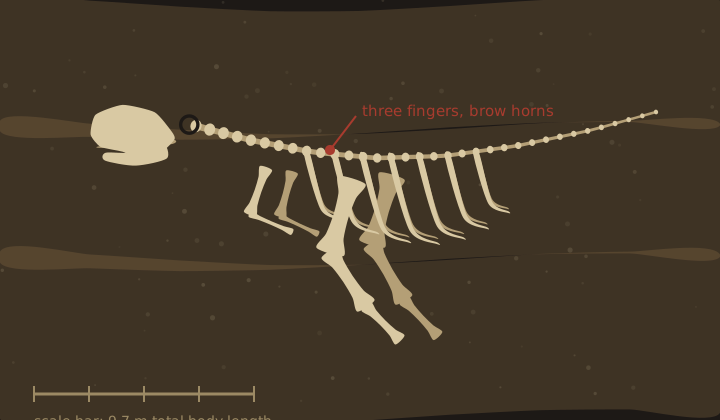
The skull as a chopping tool
The skull is large relative to the body and lightly built, with large openings that reduce its weight. The upper jaw joins the rest of the skull at a flexible suture, which lets the whole snout rock upward as part of the bite. Combined with the short, recurved teeth, the motion is a downward chop rather than the crushing bite of a tyrannosaurid.
The Cleveland-Lloyd Quarry
Excavated from the 1960s, the quarry has produced over 10,000 bones and at least 46 individual Allosaurus against far fewer remains of Stegosaurus, Camarasaurus and Diplodocus. The bones are disarticulated and mixed, which means the animals died elsewhere and were washed in, or died over a period at the same place. Both readings have been argued from the sedimentology.
| Reading | Argument for it | Problem |
|---|---|---|
| Predator trap | many predators, few prey | no obvious trap structure |
| Drought mortality | anoxic mudstone, seasonality | predators should be a minority |
| Poisoned spring | high bone concentration | hard to test |
Three explanations for the most Allosaurus-rich site in the world.
A catalogue of injuries
Study of the quarry's Allosaurus bones found a high frequency of injuries and infections: broken ribs, osteomyelitis in limb bones, a dislocated and healed toe, and bite marks on skulls consistent with other Allosaurus. The picture is of an animal that fought often, including with its own species.
Growth
Histology indicates Allosaurus grew quickly for the first decade and slowed after. Juvenile specimens have relatively longer hind limbs and larger feet, so young animals were probably faster than adults -- the opposite of what a simple scaling argument would predict.
Sources
Reference works and further reading for the material in this entry.
Where the argument is
What the Cleveland-Lloyd Quarry represents. It contains the remains of at least 46 individual Allosaurus, far outnumbering every other animal there. Predator trap, drought mortality around a shrinking waterhole, and a poisoned spring have all been proposed. The extreme over-representation of one species is the fact any explanation has to handle.
Frequently misread
-
ClaimAllosaurus is just a smaller Tyrannosaurus.
What the record showsThe proportions differ. Allosaurus has a larger, lighter skull with three fingers and prominent brow horns rather than two fingers and a deep, boxy skull. It also lived about 80 million years earlier and on a different continent.
-
ClaimIt was a sluggish scavenger because its arms were small.
What the record showsThe arms are short but the forelimb joints are robust and the three fingers end in large curved claws, capable of a strong pull. Healed and unhealed bite marks from Allosaurus occur on Stegosaurus and on sauropod bones, which is direct evidence of attack.