Jurassic 201 to 145 Ma
Megalosaurus
巨齿龙属
The first non-avian dinosaur ever named, described by William Buckland in 1824 from a jaw, teeth, ribs, a pelvis and a femur found in Oxfordshire slate. It is also the animal that gave the nineteenth century its most durable wrong picture of a dinosaur.
Published Reading time 2 min read
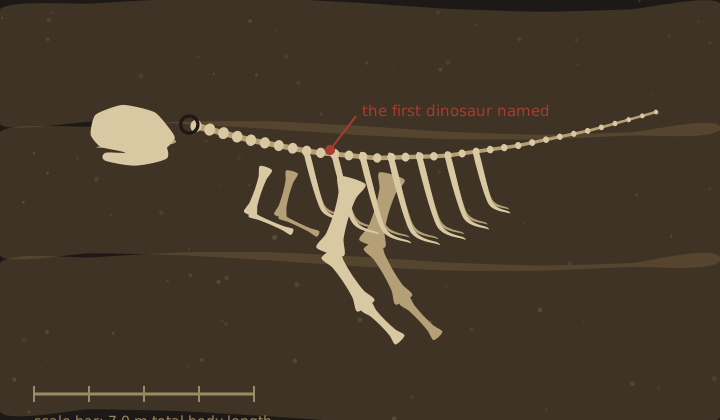
The 1824 paper and the material behind it
Buckland's description rested on specimens from the Stonesfield Slate, mostly quarried around 1815 and held in the collections of the Oxford anatomy school. The jaw fragment with a single replacement tooth in place, and the teeth themselves, are the parts that identify the animal: large, laterally flattened, curved, with serrations along both edges.
- Jaw fragment with a replacement tooth in position.
- Teeth: laterally compressed, recurved, serrated on both edges.
- Femur: robust, with a distinct fourth trochanter.
The wastebasket decades
Between about 1824 and 1900 the name Megalosaurus accumulated European theropod material of every age and continent. The list of species assigned to it at various times includes animals now placed in Eustreptospondylus, Torvosaurus, Poekilopleuron and others. The modern concept of the genus, restricted to the Stonesfield material, was only settled in the second half of the twentieth century.
| Animal once called Megalosaurus | Now |
|---|---|
| Oxfordshire Middle Jurassic material | Megalosaurus bucklandii |
| Normandy Middle Jurassic theropod | Poekilopleuron |
| Late Jurassic Portuguese teeth | Torvosaurus |
| Cretaceous English vertebrae | indeterminate theropod |
A short list from a long one: what the name used to cover.
What the Stonesfield animal looked like
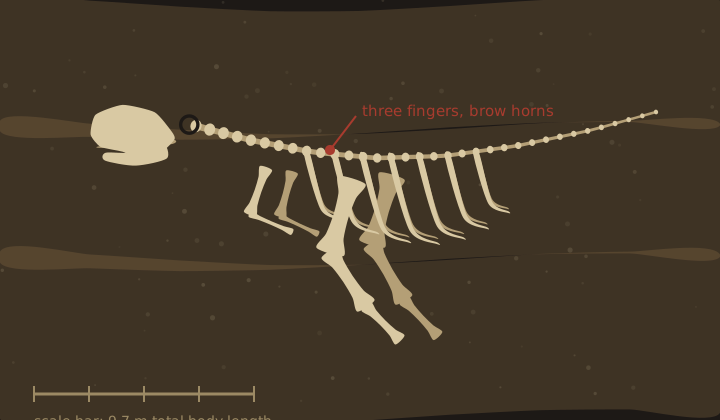
With the genus trimmed, the picture is of a Middle Jurassic theropod about 6-7 m long, with a large head, three-fingered hands and a long tail. Stonesfield also yields the other vertebrates of the same ecosystem, including the small ornithischian and the pterosaur Rhamphocephalus, and the shells of the marine animals in the same beds show that the locality was a coastal island environment.
Why the name matters anyway
Megalosaurus was the first named, the one that Richard Owen used in 1842 along with Iguanodon and Hylaeosaurus to define Dinosauria, and the taxon that made the Crystal Palace reconstructions possible. Its errors are part of its importance: the four-legged, bear-like sculptures and the 12-metre estimate are the standard illustrations of how much a first guess can be wrong.
Sources
Reference works and further reading for the material in this entry.
Where the argument is
What Megalosaurus actually was. For most of the nineteenth century it was a wastebasket: any large theropod tooth or bone from Jurassic or Cretaceous rocks in Europe was assigned to it. The genus today is restricted to the Middle Jurassic material from Oxfordshire, and the many species once placed in it have been moved out. Several published reconstructions of 'Megalosaurus' therefore describe animals that are not Megalosaurus.
Frequently misread
-
ClaimMegalosaurus was a 20-metre giant.
What the record showsBuckland's original estimate was based on a femur and a few vertebrae scaled up by comparison with a monitor lizard, and produced a 12 m animal that later work put at closer to 6-7 m. The genus has also been trimmed of dozens of species that were never it.
-
ClaimIt walked on four legs.
What the record showsThe 1854 Crystal Palace sculpture by Waterhouse Hawkins shows Megalosaurus on four legs, hunched like a bear. The animal is an obligate biped with a long tail carried horizontally. The sculpture was made before the anatomy was understood and is a period piece, not a reference.