Cretaceous 145 to 66.0 Ma
Therizinosaurus
镰刀龙属
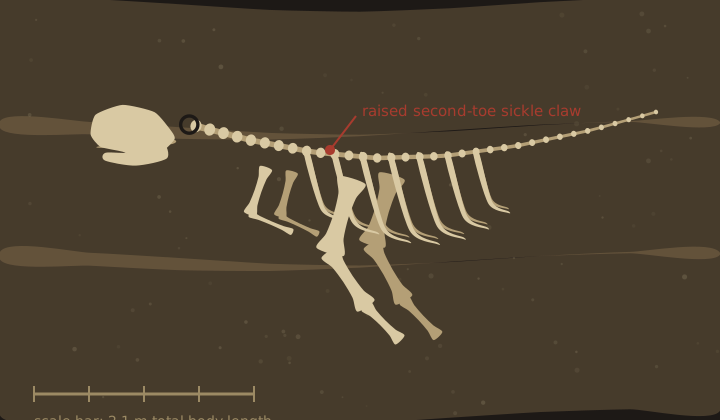
A theropod that gave up meat, and the owner of the largest claws known on any animal. Known from a handful of bones from the Nemegt Formation, including three manual claws that are each close to a metre along the curve.
Published Reading time 2 min read
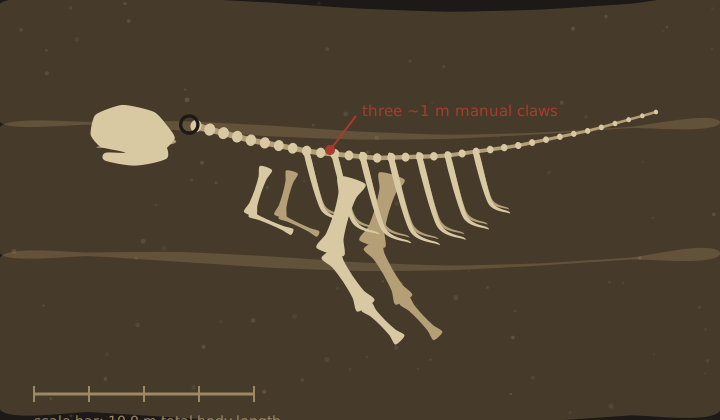
A theropod that is not a predator
Therizinosaurus belongs to the theropods by descent -- its ancestors were bipedal predators -- but the group it belongs to, the therizinosaurs, moved to herbivory. The jaw has a beak, the teeth are small and leaf-shaped rather than bladed, the pelvis is broad and the foot has four weight-bearing toes instead of three. Every one of those features is a departure from the predatory body plan.
- Beak at the front of both jaws.
- Small, leaf-shaped teeth, not serrated blades.
- Four weight-bearing toes, not three.
- Broad, plate-like pelvis for a large gut.
The claws, measured
The three known manual claws are elongated and gently curved, with a rounded cross-section and a blunt tip. In life they would have carried a keratin sheath extending them further. Finite-element work on therizinosaur claws found they could resist bending forces along the length, so they were strong; the question is what they were strong enough for and against.
| Proposed use | Supports it | Against it |
|---|---|---|
| Pulling branches down | strength in bending; herbivorous diet | a beak alone would do the job |
| Display | largest claws in the animal kingdom | untestable |
| Defense | large size; predators present in the Nemegt | no damage traces or matching injuries |
The three readings of the claws, and the objection to each.
The Nemegt Formation
Therizinosaurus shares the Nemegt beds with Tyrannosaurus-lineage predators, the giant ornithomimid Deinocheirus, the sauropod Nemegtosaurus and the hadrosaur Saurolophus. The formation is a large river floodplain with meandering channels, and the climate was wetter and more forested than the earlier Barun Goyot and Djadokhta beds. That setting supports the browsing interpretation of therizinosaur biology.
The naming, and what came later
Maleev named the genus in 1954 from a claw he took to belong to a giant turtle-like reptile, hence the name 'scythe lizard'. It took decades and better material, including the 1990s discovery of the partial Alxasaurus skeleton in China, to place therizinosaurs within the theropods as herbivores rather than treating them as an isolated group.
Sources
Reference works and further reading for the material in this entry.
Where the argument is
What the claws were for. At nearly a metre long they are the largest known claws on any animal, and they are too weak to have been used for digging and too blunt at the tip for hooking. The three standing readings -- display, pulling down branches, and defense -- have all been proposed, and the 2012 discovery of the related Jianchangosaurus with a complete skeleton supported the herbivorous-browsing interpretation without settling the claw's use.
Frequently misread
-
ClaimTherizinosaurus used its claws to kill large prey.
What the record showsThe teeth are small, leaf-shaped and built for plants, the jaw has a beak at the front, and the gut would have needed to be large and barrel-shaped. Related genera have been found with gastroliths and preserved stomach contents of plant material.
-
ClaimThe claws were curved like a sickle for slashing.
What the record showsThey are long but nearly straight, with a gentle curve and a rounded cross-section. A slashing claw needs to be narrow-edged and strongly curved, as a dromaeosaur's is; therizinosaur claws are neither.